
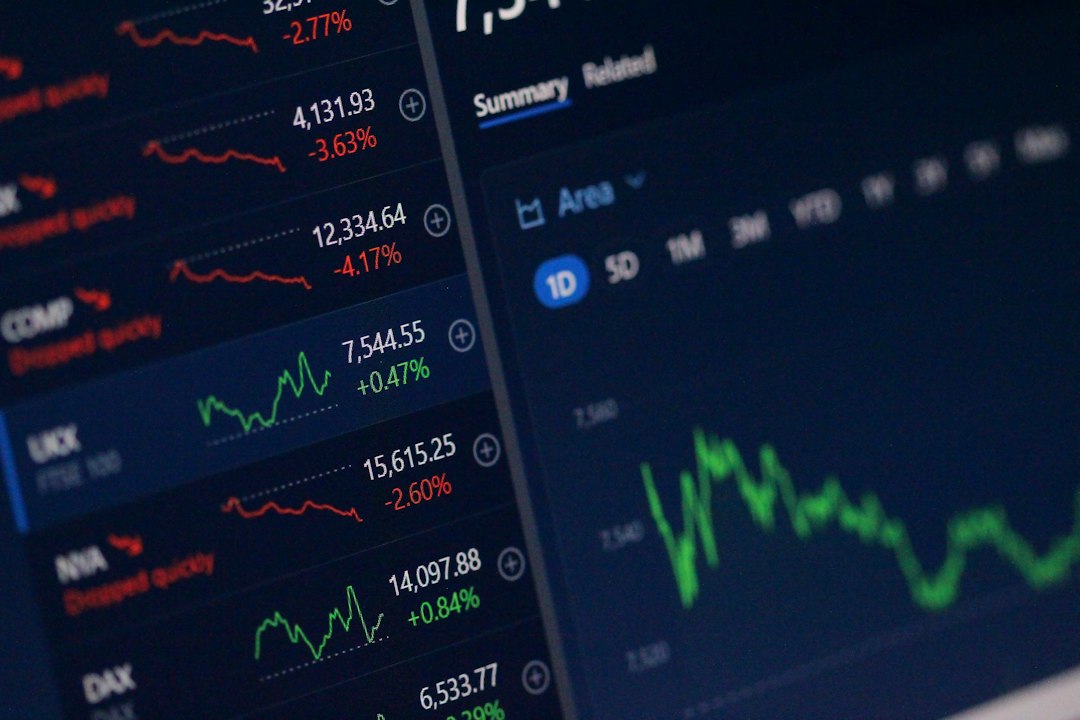
Successful market research requires more than watching price movements. Traders need reliable ways to organize charts, investigate trends, define orders, monitor conditions, and review previous decisions. forex trading mt4 brings many of these functions into a single trading environment, making it possible to move between analysis and execution without changing platforms. Official MT4 information highlights interactive charts, technical indicators, flexible order handling, algorithmic trading, alerts, mobile applications, and historical data as key elements of the platform.
Table of Contents
- Market Analysis Begins With Clear Price Visualization
- Analytical Objects Add Visual Context
- Technical Indicators Can Organize Market Information
- Order Management Is Central to Platform Functionality
- One-Click Trading Supports Direct Execution
- Automated Trading Supports Rule-Based Strategies
- Historical Data Helps With Research
- Alerts Create a More Organized Monitoring Routine
- Financial News Adds Fundamental Context
- Mobile Trading Improves Accessibility
- Trade History Supports Ongoing Evaluation
- Custom Workspaces Improve Efficiency
- Building a Balanced MT4 Workflow
- Conclusion
Market Analysis Begins With Clear Price Visualization
Price charts provide the foundation for technical market research. MT4 allows traders to display currency instruments through interactive charts and examine them across different timeframes. The platform’s charting system supports multiple periods, from short-term views through longer-term analysis.
Different timeframes can provide different perspectives on the same instrument. A broader chart may reveal an established direction, while a shorter chart can show more detailed movements within that structure.
This multi-timeframe approach can help traders avoid examining isolated price movements without context. Instead of reacting to every short-term fluctuation, users can compare different periods and determine whether the current movement fits a broader market structure.
Analytical Objects Add Visual Context
Indicators are not the only analytical tools available. MT4 also provides graphical objects that can be applied directly to charts. These include lines, channels, shapes, arrows, and other tools that can assist with visual market interpretation.
Such objects can help traders mark areas they consider significant. Support and resistance zones, trend structures, price channels, and other observations can be displayed directly on the chart.
The benefit of visual organization is that a trader can return to the same chart and quickly understand the reasoning behind previous observations. This can be particularly helpful when monitoring several instruments.
Technical Indicators Can Organize Market Information
Technical indicators transform price-related information into calculated values that can help traders study market conditions. MT4 provides built-in indicators and supports custom analytical tools.
The important consideration is not how many indicators appear on a chart but whether each one contributes useful information. A chart filled with overlapping signals may make interpretation harder rather than easier.
A structured setup might separate different analytical purposes. One indicator could help identify direction, another could provide momentum information, and another could assist with volatility assessment. The exact combination depends on the trader’s methodology.
Using indicators as supporting evidence rather than automatic decision-makers can encourage more deliberate analysis.
Order Management Is Central to Platform Functionality
A trading platform must make it possible to convert analysis into an actual order. MT4 supports market orders and pending orders, along with Stop Loss, Take Profit, and trailing-stop functions.
Pending orders are particularly useful for strategies based on predetermined price conditions. Instead of entering immediately, traders can establish an order that activates if the market reaches a specified level.
Stop Loss and Take Profit can also make the intended trade structure clearer. Before entering a position, traders can define conditions for limiting an adverse movement or closing at a selected target.
These tools should always be considered alongside market risk. An order mechanism does not guarantee execution at an exact expected outcome under every market condition.
One-Click Trading Supports Direct Execution
MT4 provides several ways to place orders, including trading directly from charts when the relevant functionality is enabled. The platform documentation also describes one-click trading as a method for performing trade operations efficiently.
Direct chart-based execution can be useful when a trader needs to connect a visual observation with an order quickly. However, speed should not replace preparation.
A good workflow can involve checking the instrument, reviewing the relevant timeframe, confirming the trading conditions, and then executing the planned order. Fast execution is most useful when it follows a clearly defined process.
Automated Trading Supports Rule-Based Strategies
MT4’s algorithmic environment allows traders to develop Expert Advisors using MQL4. MetaEditor provides the development environment, while the Strategy Tester can be used to examine automated strategies.
Automation can reduce repetitive manual tasks when trading rules are clearly defined. For example, an Expert Advisor can monitor market conditions and respond when programmed criteria are met.
The main advantage of rule-based automation is consistency in applying predefined instructions. Yet automation also requires careful oversight. A strategy can perform differently when market conditions change, and coding errors can affect its behavior.
Testing, monitoring, and periodic review should therefore remain part of any automated workflow.
Historical Data Helps With Research
Historical market data is useful when traders want to study how instruments behaved during previous periods. MT4 provides access to historical quotes and trading records, creating opportunities for structured review.
Historical analysis can reveal recurring patterns, unusual movements, and periods of changing volatility. It can also help traders investigate how an analytical approach behaved under different market environments.
However, historical evidence should be interpreted carefully. Past behavior does not establish what the market will do next. Its primary value is as research material for understanding strategy behavior and market structure.
Alerts Create a More Organized Monitoring Routine
Continuous chart watching is not always practical. MT4’s alert functionality allows users to create notifications based on specified market conditions. Depending on configuration, alerts can generate sounds, email messages, or mobile notifications.
A trader can use an alert when a currency pair approaches a level that deserves further examination. Once notified, the trader can return to the chart and evaluate the complete market context.
This can make monitoring more deliberate. Rather than reacting to every movement, users can define conditions that deserve attention before the event occurs.
Financial News Adds Fundamental Context
Price charts provide one form of information, but currency markets can also react to economic and political developments. MT4 includes financial news functionality that can help users remain aware of relevant market events.
News awareness can be useful when interpreting sudden price movements. A technical setup may behave differently around significant economic developments, making broader context relevant to the trader’s research process.
The platform therefore supports both chart-based observation and access to market information, allowing traders to consider multiple forms of evidence.
Mobile Trading Improves Accessibility
The mobile version of MT4 allows traders to access market information through supported smartphones and tablets. Mobile functionality includes charts, trading orders, account monitoring, trade history, analytical tools, and push notifications.
Mobile access can be particularly useful for checking open positions or responding to alerts when away from a computer.
Still, accessibility should be balanced with discipline. Having constant market access does not mean that every price movement requires an immediate response. Mobile functionality is most useful when it supports an established trading plan.
Trade History Supports Ongoing Evaluation
Reviewing completed trades can provide valuable information about trading behavior. MT4’s Terminal includes an Account History area where previous operations can be examined.
A regular review may focus on entry quality, exit decisions, order management, and adherence to predetermined rules. Traders can also compare platform records with personal notes to identify differences between intended and actual decisions.
This type of review turns trading into an ongoing learning process. Instead of evaluating individual outcomes in isolation, traders can study repeated patterns across their own activity.
Custom Workspaces Improve Efficiency
Customization is another practical feature. Traders can arrange charts, indicators, analytical objects, and other elements according to their preferred workflow.
A well-designed workspace can reduce unnecessary navigation. Frequently monitored instruments can remain accessible, while chart templates can preserve consistent analytical layouts.
The objective is not to create the most complicated workspace. It is to create one that presents relevant information clearly and supports a repeatable routine.
Building a Balanced MT4 Workflow
The strongest benefit of a feature-rich platform comes from combining tools logically. A trader might begin by reviewing broader chart conditions, move into detailed technical analysis, mark relevant areas, establish potential order conditions, and create alerts for later monitoring.
If an automated strategy is involved, testing and performance review become additional stages of the process. After trades are completed, account history can be examined to evaluate how the original plan was implemented.
This creates a complete cycle of research, preparation, execution, monitoring, and review.
Conclusion
MT4 provides a broad collection of tools for traders who want to organize their market-analysis and trading activities within one environment. Interactive charts, indicators, graphical objects, flexible orders, alerts, automation, historical records, financial information, and mobile access each address a different part of the trading workflow.
The practical value of these features depends on how they are used. Traders who understand each function can build a workspace that supports research without unnecessary complexity. By combining careful analysis with structured execution and regular review, users can make better use of the platform’s capabilities while maintaining awareness of the risks involved in currency trading.



Leave a Reply